Overview
The Adaptation Network ran a pilot to strengthen advocacy capacity among community based organisations and groups that worked with marginalised people. The project helped organisations link climate adaptation to their own lived realities, understand the Climate Change Act and see how they could engage with policy in ways that reflected rights-based needs. It aimed to connect grassroots and advocacy organisations so they could take part in the National Adaptation Plan process. The approach blended peer learning, expert support, communication skills and policy engagement. The project was funded by the NAP Global Network through IISD.
Who was involved
Organisations from the Eastern Cape and Limpopo, together with advocacy groups working with marginalised people, formed the core of the pilot. The focus was on rural groups working with youth, women and people with disabilities. Participating groups included Isithembiso Multipurpose Organisation, Kidlinks Small Farm Incubator, Vhembe Biosphere Reserve, Dzomo la Mupo, GenderCC and Disabled Youth South Africa.
Project Inception
The work began with agreement on project design and the development of selection criteria aimed at reaching highly marginalised constituencies. A wide call for applications was issued, shortlisting was done and six organisations were selected.
All participating organisations completed an advocacy capacity assessment. The assessment showed mixed strengths, with some groups needing foundational support in climate adaptation, communication and policy engagement while others brought stronger experience in rights-based advocacy. These findings shaped adjustments to the workplan.
During this stage the team also realised the need to include organisations that explicitly advocated for the rights of marginalised groups, rather than only CBOs working with these groups. The shift strengthened the design by anchoring community experience in formal advocacy spaces. Work then focused on creating a revised schedule, planning peer learning and preparing expert input from across the network.
The inception phase laid the foundation for the next stages, which aimed to build policy knowledge, strengthen organisational advocacy strategies and support engagement with the national climate policy process.
Planning
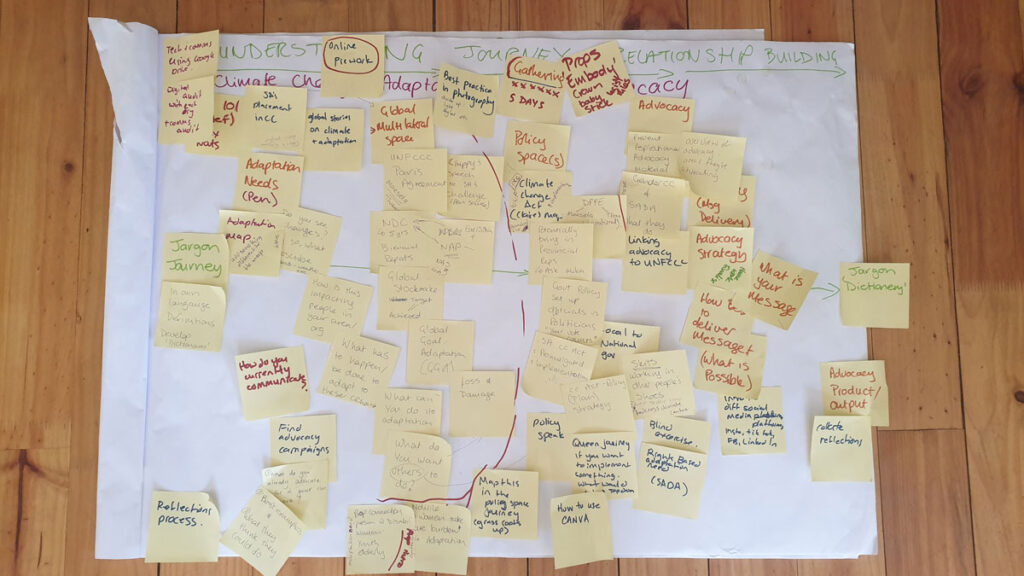
Much of the work in this phase focused on developing a draft roadmap for the Learning Journey. The project team held one-on-one meetings with each CBO to understand their needs, constraints and readiness. Separate engagements with GenderCC and Disabled Youth South Africa ensured strong representation of gender and disability advocacy.
Due to low participation during online sessions and scheduling difficulties, the workplan was adapted so that the in-person Learning Journey would take place earlier. This was agreed by participants and the steering group as it offered a better way to build trust and collaboration.
An initial mapping of the policy environment was completed, including a visual outline of adaptation elements in the Climate Change Act. The AN Coordinator also attended a specialist session by the Department of Forestry, Fisheries and the Environment on climate scenario development.
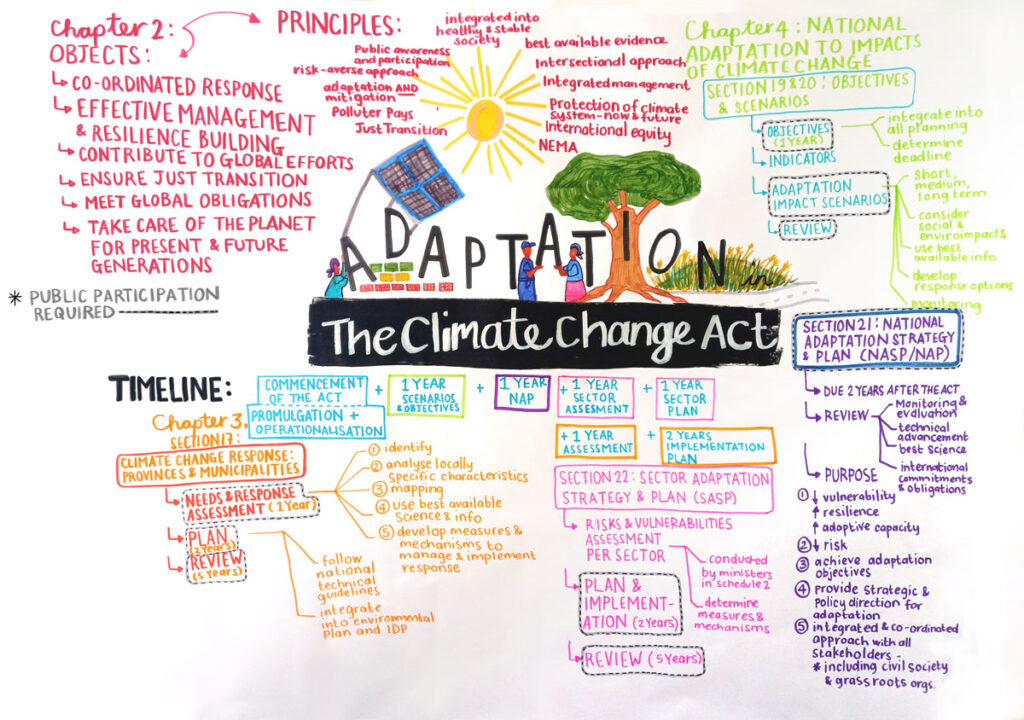
Understanding the Climate Change Act. Graphic Harvest by Claire Rousell of Mycelium Media Colab.
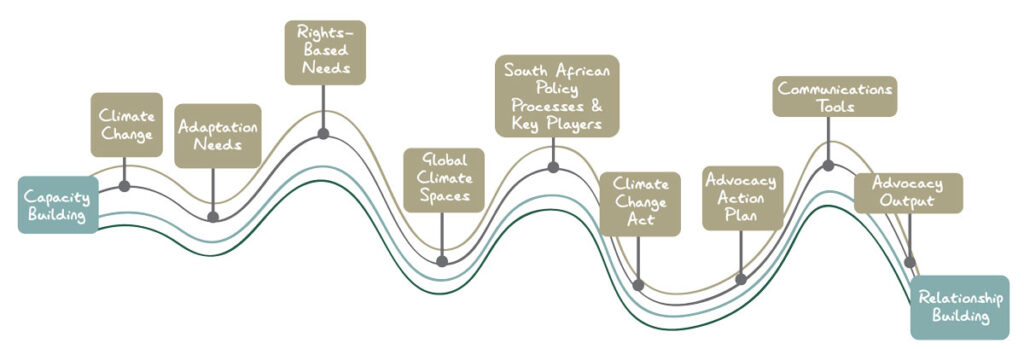
Planning for the Learning Journey was intensive. The programme included climate change basics, intersectionality, inclusive practice, theatre-based exploration of climate vulnerability, communication skills, social media, legal advocacy input and bespoke advocacy strategy development. Online preparatory tasks and supporting materials were also created.
The planning phase strengthened relationships, clarified needs and built momentum toward a shared in-person learning space. This prepared the group for deeper advocacy work and future engagement in national adaptation processes.